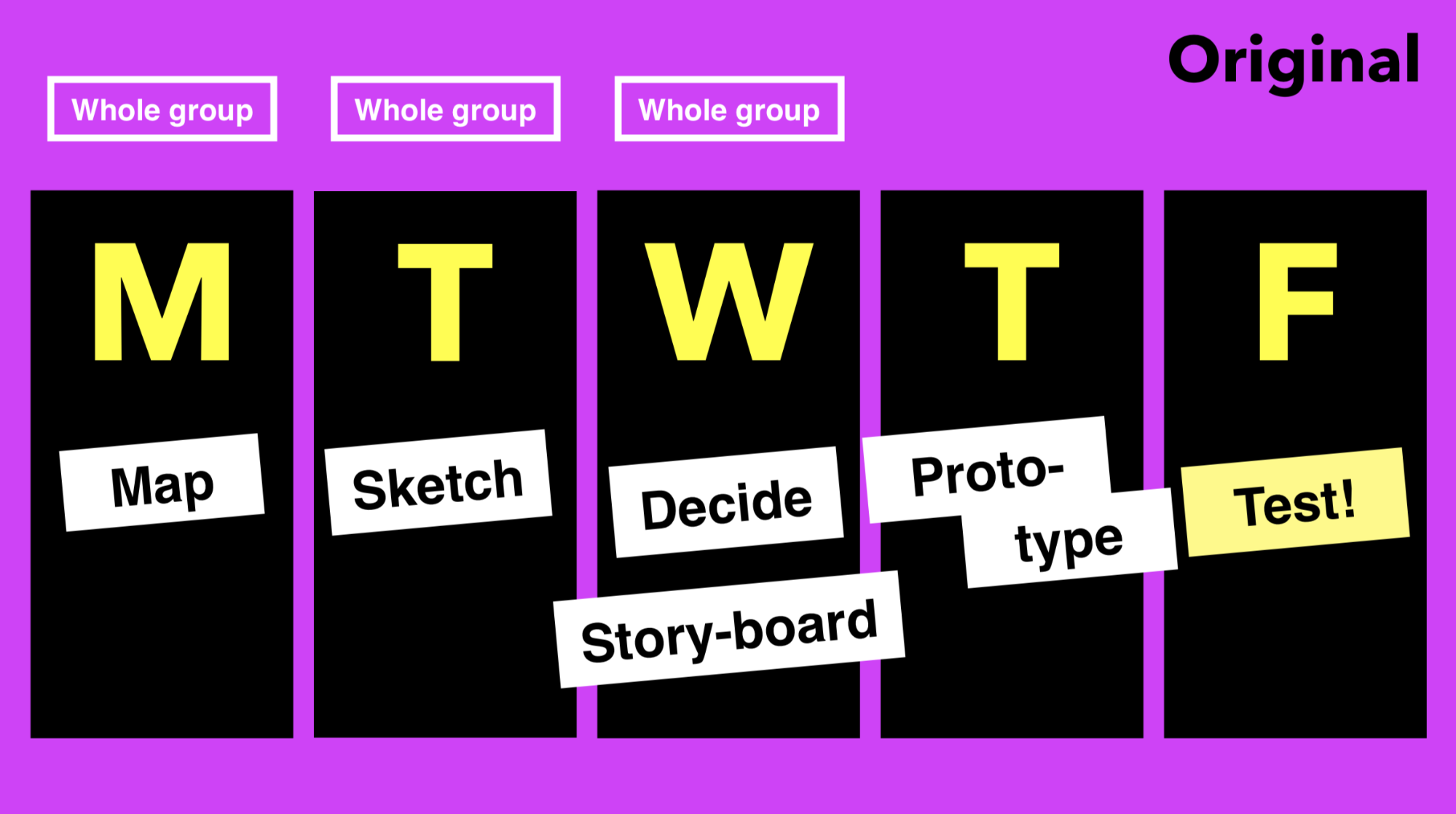
The Design Sprint is a process for answering critical business questions through design, prototyping, and testing ideas with customers.
The Design Sprint relies on a consecutive row of workshops that supports co-creation and empowerment.
It’s a “greatest hits” of business strategy, innovation, behavioural science, design thinking, and more—packaged into a battle-tested process that any team can use. It comes from the “Sprint” book written by Jake Knapp and John Zeratsky at Google Ventures.
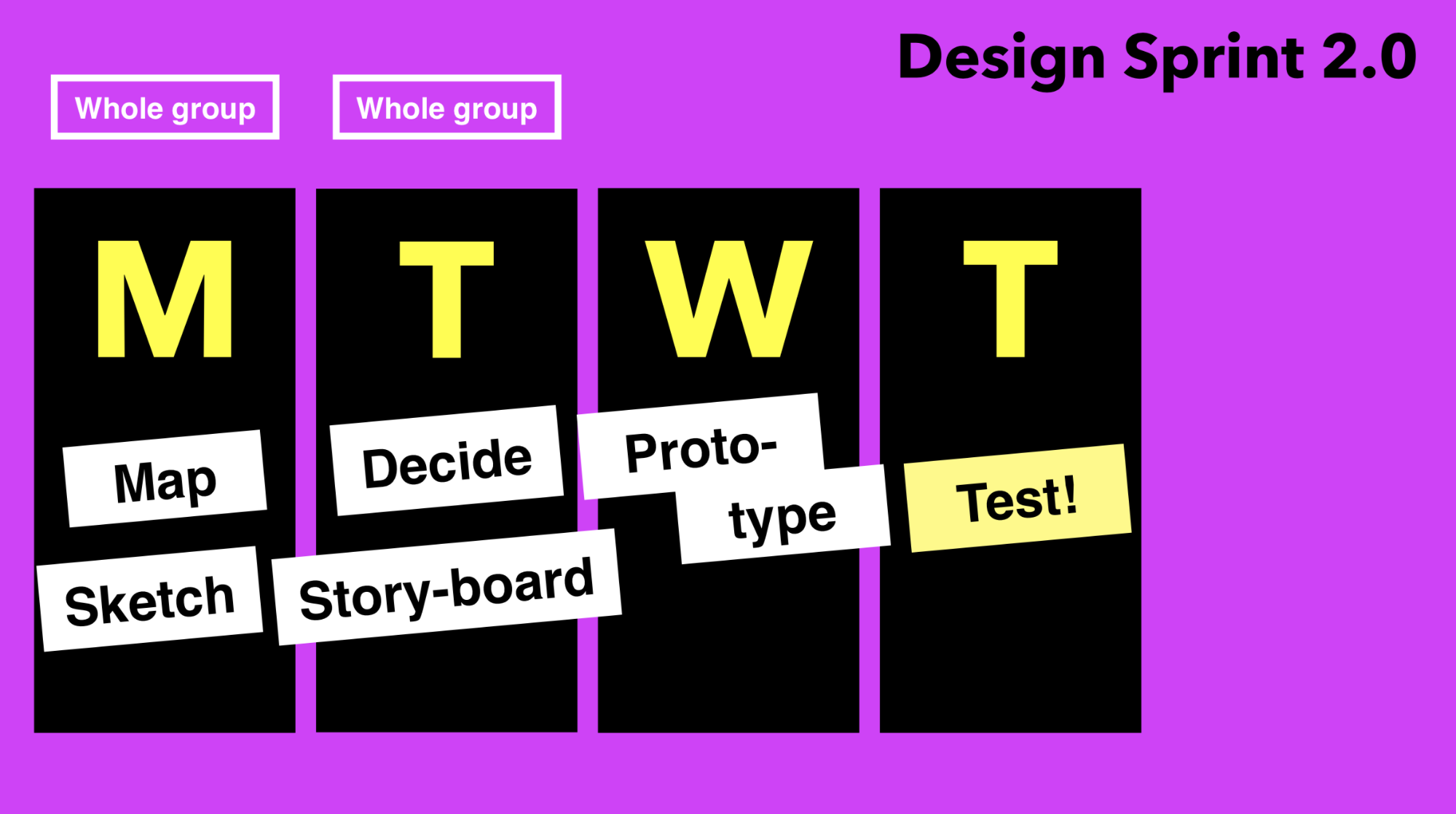
The formats recommended below are updated from AJ&Smart, a more efficient and condensed version, aptly named Design Sprint 2.0.
This is part of UX Playbook
UX Playbook gives you step-by-step process for any UX project.
Full access to all 13 UX plays, including 132+ pro tips, 36+ templates, presentation, spreadsheets, scripts, best practices, and more.
🛒Get limited offer today
⭐ 1. Decide
The design sprint process is not a silver bullet. There are other methods, such as service blueprint and different design workshops, that could be a useful alternative.
However, there are situations where design sprints are likely your best option. Here are a few examples where a design sprint approach might be the most effective framework to choose:
Setting direction on a new effort
New (and often important) projects require a lot of alignment. Sometimes this need for alignment comes in the form of extensive documentation, long presentations, informational meetings, and follow-up conversations. Sometimes they don’t come with any documents, which can be worrisome.
The design sprint process gets everyone critical to the success of the project on the same page from the start. They can learn together as a team, or leverage pre-sprint research and techniques (such as problem framing) to set direction on gain understanding of a new project initiative… without a lot of time and effort.
Establishing an initial process
Several activities and techniques with the design sprint process lend themselves to mapping and exploring processes. Mapping, storyboarding, user flows and other activities can help visualise how different types of process (hiring, finding requirements for projects, conducting user research, etc.) can be worked out.
Aligning a diverse project team
Working on complex products and applications naturally draws in a wide group of people and professionals. Designers naturally gravitate toward working and collaborating with other designers, developers toward other developers, etc. When the circumstance calls for it, you engage with other disciplines.
Design sprints require a diverse set of professionals to work on big challenges, ideas or problems. When working in this condensed, collaborative environment, there’s a greater chance for understanding and alignment.
In the ideal situation, there is a natural appreciation of other points of view, constructive criticism of ideas, and active dialog about the problem space. Subject matter experts (SME’s) in particular become vital to establishing perspective for the entire team to align on.
Gaining speed, efficiency and focus.
Majority of sales and marketing professionals will emphasise speed and time to market over getting everything right. Product owners and managers will want a certain level of quality to go out the door before they feel comfortable releasing something to their customers. Those in design and research emphasise product quality, with a keen focus on understanding the customer and what they react to.
Design sprints address all three of these approaches in just 4 days. Sales and marketing can have their hands on a realistic prototype they can shop around by the end of the week. Product owners and managers can feel confident that the highest value features are represented in the sprint teams’ prototype. Design and research can focus on the UX in their designs, with validation (or invalidation) of their approach through 1 on 1 user interviews. All of this, in 4 days (or less).
Reducing the risk of failure
No one wants to risk losing their job over a failed project or initiative. In most companies, it’s must easier to shift the blame of an expensive, time consuming initiative to a person, group or entire department. In short, no one ever wants to admit they made a huge mistake. There’s no upside to corporate courage and professing failure.With design sprints, you can short circuit or eliminate this scenario from even happening. By reserving a full week of time to explore a high risk / high reward endeavor, you essentially give everyone concerned “decision insurance” to stop bad ideas in their tracks.Moreover, you empower those who make critical business decisions with informed perspective. That’s mission critical for gaining trust and acceptance for those you work for.
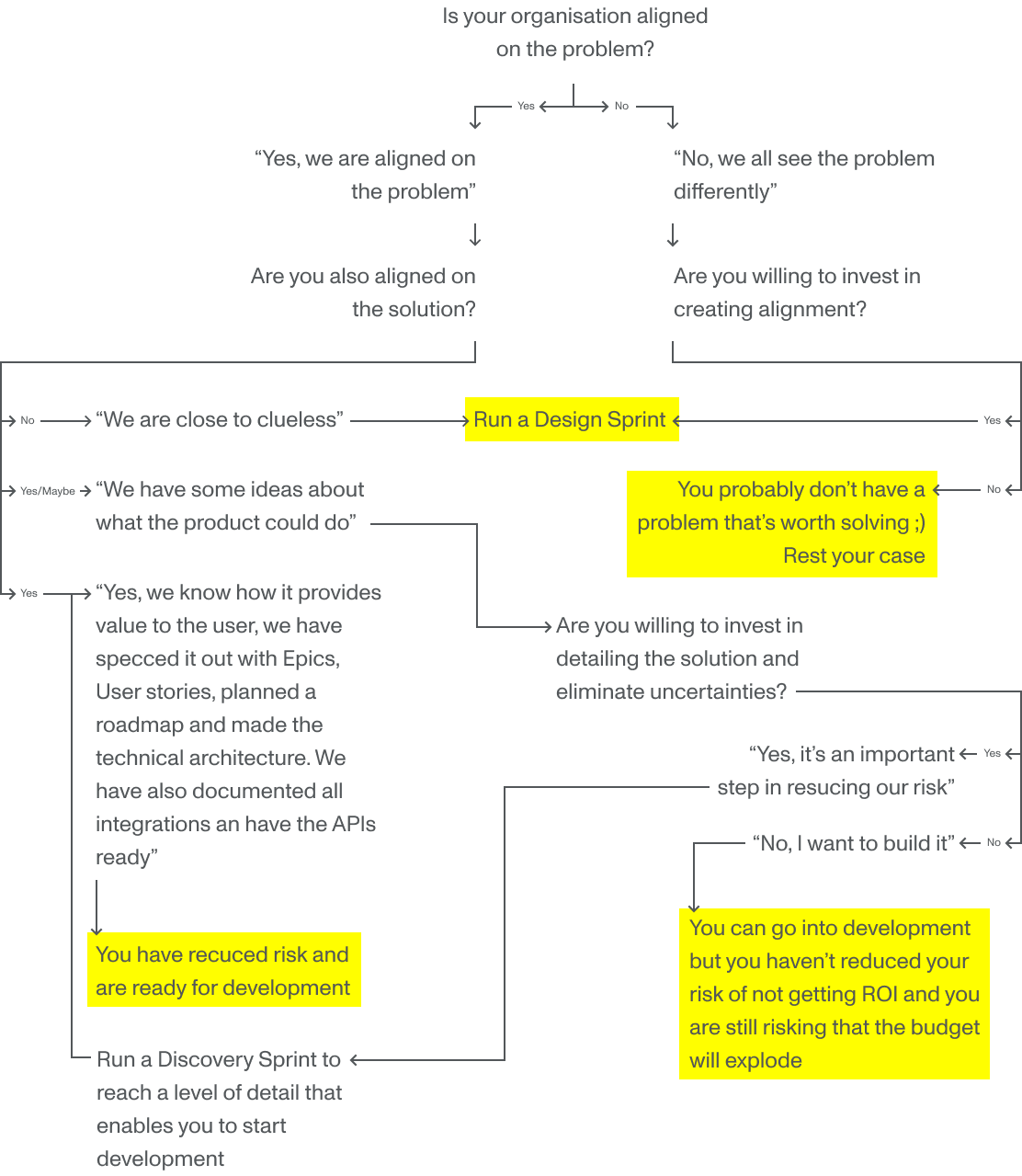
If you find yourself in any of the above situations, you certainly want to consider the Design Sprint. Here’s a diagram to help you decide if this process is for you:
⭐ 2. Format
The Design Sprint can be used to tackle lots of different problems. Depending on their complexity of the project or size of the challenge, the exercises can be broken down and tailored your specific needs. Here are some recommend formats:
1️⃣ 1-Day Sprint
✅ Pros
Easiest to setup
Perfect for busy teams & smaller groups
Requires 1 beginner facilitator
Provide immediate ideas & solutions
Sell the process to stakeholders that haven’t entirely bought in to the value of the Design Sprint
How to run Design Sprint step-by-step has been written about extensively. After leading numerous Design Sprints, here are the best tips to help you become an expert facilitator.
1️⃣ Focus on the Big 3
Ask questions, write stuff down, and mind the clock. When feeling overwhelmed, get back to the basics.
2️⃣ Trust the recipe
Constantly refer to the process to remind you of the next steps. The recipe sets you free to do your job well.
3️⃣ Get commitment in advance or don’t do the sprint
People coming and going to other meetings will ruin the sprint and it is painful and hard to stop once it starts. Get commitment in advance for people to be in the room 10am–5pm or don’t do the sprint at all.
4️⃣ Explain the sprint before you start
Sprints are much easier to facilitate when people know how the activities fit into the whole. On the first morning of the sprint, before you begin, tell a quick story about what the sprint is going to be like. And on the beginning of each subsequent day, you remind the team what’s going to happen that day.
5️⃣ Ask for permission
Once you’ve explained the sprint, tell the team you’re going to facilitate, keep things on schedule, and move everyone from step to step. Then say “Sound okay?” Don’t expect a chorus of enthusiastic responses—but there is something powerful and symbolic about getting the team’s permission.
6️⃣ Write names on the board
It’s important for the facilitator to learn people’s names—conversations go so much better when you call people by name.
⚡
Pro Tip
Go around the room and ask everybody to introduce themselves and write their names in a corner of a whiteboard, making a little map of the room.
The Design Sprint is a series of consecutive workshops that supports co-creation and collaboration. The Sprint is playful, geared towards fast decision making, and keeps everyone in the loop.
However, the days-long workshop format is not for everybody. In a provocative way, the Design Sprint is purposefully uncomfortable and brings people out of their comfort zone to reach new standards of working together.
There are plenty of design thinking approaches and processes that might align better with you, your team or your organisation. Nevertheless, more and more organisations are adopting, refining and modifying the Design Sprint process for their own purposes.
Whether it’s research, marketing, growth design, branding, strategy or any other disciplines related to building product or exploring market impact, the Design Sprint process is slowly being accepted as a viable, efficient, and cost saving option.
🧰 Get more resources
This is part of the all-in-one toolbox for UX designers. Over 50+ battle-tested step-by-step guides and 100+ industry-standard templates.
Get UX Playbook for $99Full access to all 13 UX plays, including 132+ pro tips, 36+ templates, presentation, spreadsheets, scripts, best practices, and more.
🛒Get limited offer today
❤️ Loved by 900+ designer from 68 countries
The best email 📮 for
growing 🌱 designers
Honest notes about the work behind the work.
Read in 2 minutes, weekly. Free forever.
Join 13,045 designers and get tactics, hacks, and tips.
![Design Sprint 2.0 [Preview]](https://api-prod.usenotioncms.com/v1/proxy-2/block/e19d73b4-b43d-4a46-809d-ff2c4365e1e9%2Fff87d617-9c5f-482a-8ca5-b54b5d49793b%2Fdesign_sprint_-_cover.png)